Wind-Assisted Propulsion Retrofits: What Lloyd's Register's 2024 Report Means for Fleet Decarbonisation Decisions
What the report establishes
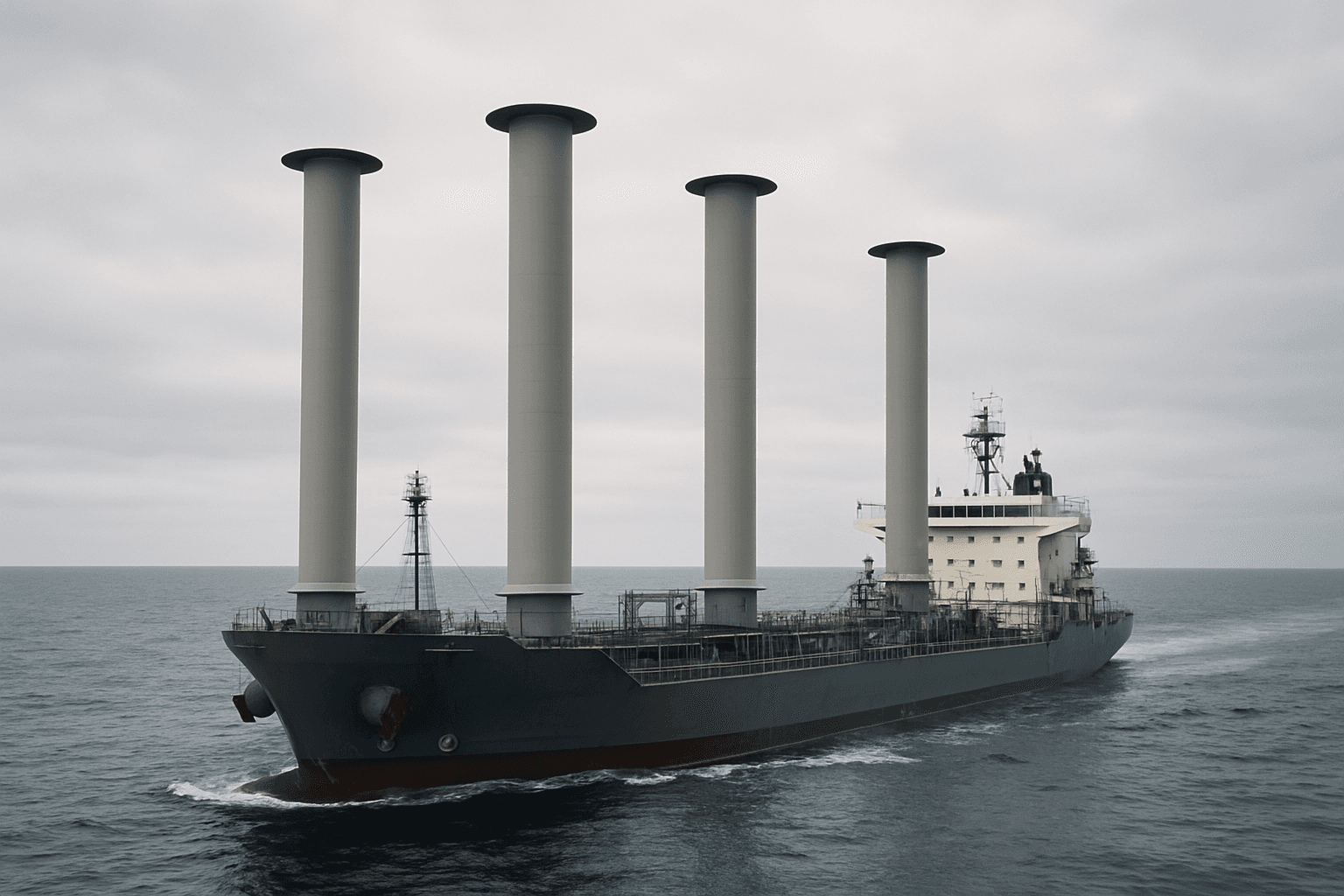
Lloyd's Register has published the first instalment of its Energy Efficiency Retrofit Report series dedicated to wind-assisted propulsion systems (WAPS), following an earlier Engine Retrofit Report on alternative fuel conversions. The document identifies four commercially deployed WAPS technologies: Flettner rotors, rigid sails, suction wings and kites. Soft sails and hybrid variants are excluded on the basis of limited installation history on merchant vessels, a distinction that matters for anyone benchmarking claimed savings against actual fleet experience rather than pilot projects.
The report's central finding is structural rather than technical. As of its publication, only around 16 shipyards worldwide have completed WAPS retrofits. That figure sets a hard ceiling on near-term uptake regardless of how compelling the emissions case becomes as CII and EEXI thresholds tighten under IMO's stepped efficiency framework and FuelEU Maritime penalties accumulate for vessels missing greenhouse gas intensity targets.
The verification gap owners must close
The report states plainly that no standardised method exists to verify claimed fuel savings across all four technologies. LR notes that limited in-service data already shows performance diverging significantly from pre-installation projections. For technical managers, this is the operative risk: a WAPS installation contracted on projected savings figures cannot be treated as a verified compliance measure until independent, in-service performance data confirms it.
This has direct governance consequences. Charter operators making ESG claims tied to WAPS-assisted vessels need documented, third-party performance verification, not supplier projections, before those claims appear in owner or guest-facing material. LR's own service offering includes independent third-party performance studies precisely because this gap exists, though operators should still seek verification from a party with no commercial stake in the installation decision.
Operational constraints compound the picture. WAPS installations can affect vessel speed, cargo capacity and port access depending on rig height, retraction mechanisms and deck arrangement. None of these trade-offs are captured in a single efficiency percentage, and technical managers evaluating retrofit proposals need route-specific and port-compatibility studies before committing capital, not generic savings estimates.
What to monitor
Three developments will determine whether WAPS retrofits scale beyond niche adoption. First, installation capacity: whether shipyard numbers expand beyond the current 16 as demand accelerates alongside tightening carbon costs. Second, standardisation: whether IMO's Low Carbon Global Industry Alliance, through its Wind Propulsion Technologies Roundtable involving the International Windship Association, produces a common savings verification methodology. Third, regulatory treatment: how WAPS-derived efficiency gains are credited under FuelEU Maritime's compliance balance and any forthcoming IMO market-based measure.
LR is explicit that full wind propulsion remains viable only for specific trades, with WAPS positioned as a supplementary measure. For fleet decision-makers, the technology's value depends less on the physics of wind capture and more on whether verification, installation capacity and regulatory credit catch up with the ambition driving current interest.