ENX: Lateral's 70 m Concept Designed Around a 60 MWh Battery System
Lateral Naval Architects unveiled the ENX concept at the Monaco Yacht Show 2026. It is a 70 m yacht of about 1,700 GT, designed to take yacht electrification from hybrid to battery-led power while keeping the range and capability expected of a yacht this size. All figures below are Lateral's own design estimates. They have not been independently verified, and the complete battery system has not yet been through class approval. The text reviewed does not mention a builder or an order.
How the 60 MWh was sized
Lateral analysed AIS data for the Mediterranean charter fleet, with operational experience from on board, to see where yachts went, at what speed and for how long. It found that a highly efficient 70 m yacht of about 1,700 GT would need roughly 37 to 50 MWh for propulsion and hotel load over a typical one-week charter of about 350 nautical miles.
To meet this demand while allowing for end-of-life degradation and battery reserves, Lateral estimated about 60 MWh of installed capacity, equal to around 300 tonnes of battery mass. The studio says the chosen battery technology is suitable for use within the next five years, and its method projects about 20 per cent more energy density than today's commercially available marine batteries.
Design and operating modes
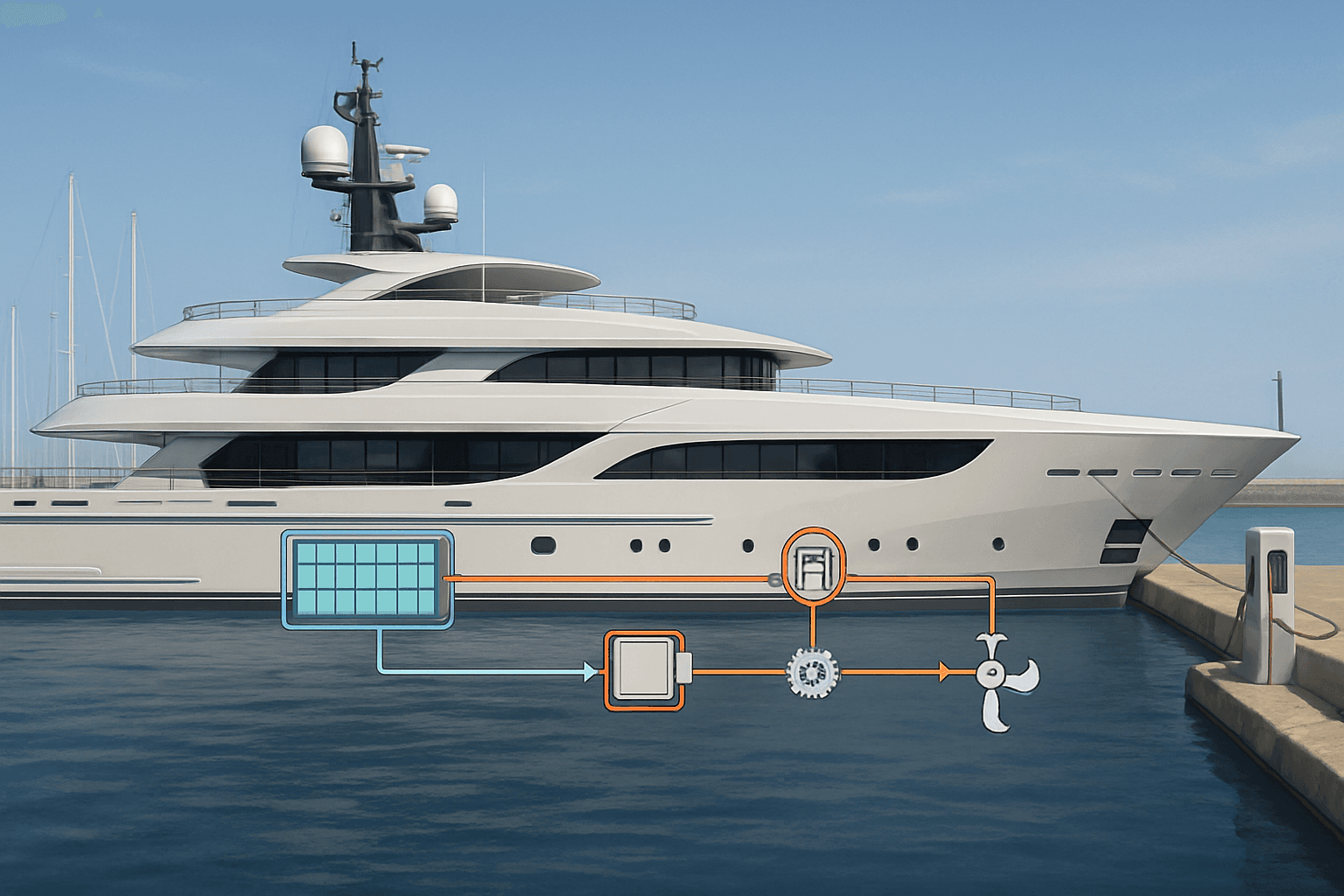
The batteries sit in three dedicated rooms forward, midship and aft. ENX was designed with batteries as the primary consideration rather than fitted into leftover space. The yacht uses Lateral's Series A hull form, optimised for slower speeds, with a DC grid, variable-speed generators and advanced HVAC and thermal management. Lateral reports an electric range of 625 nm at 11 knots and a top speed of 14 knots. In typical charter operation the yacht runs on batteries alone for propulsion and hotel loads. An onboard Energy Extender enables extended passages between charters, with a range of 4,500 nm.
Charging
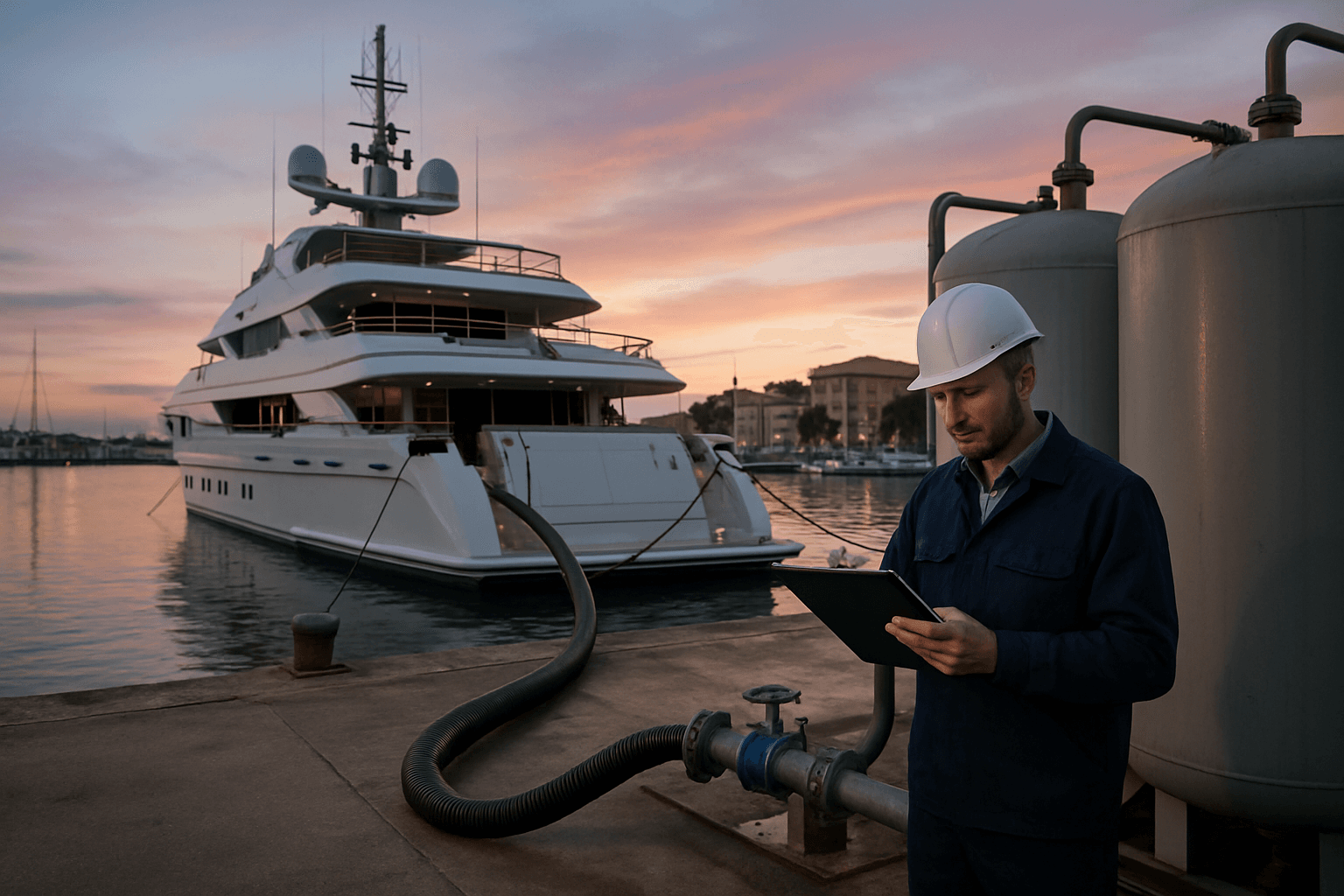
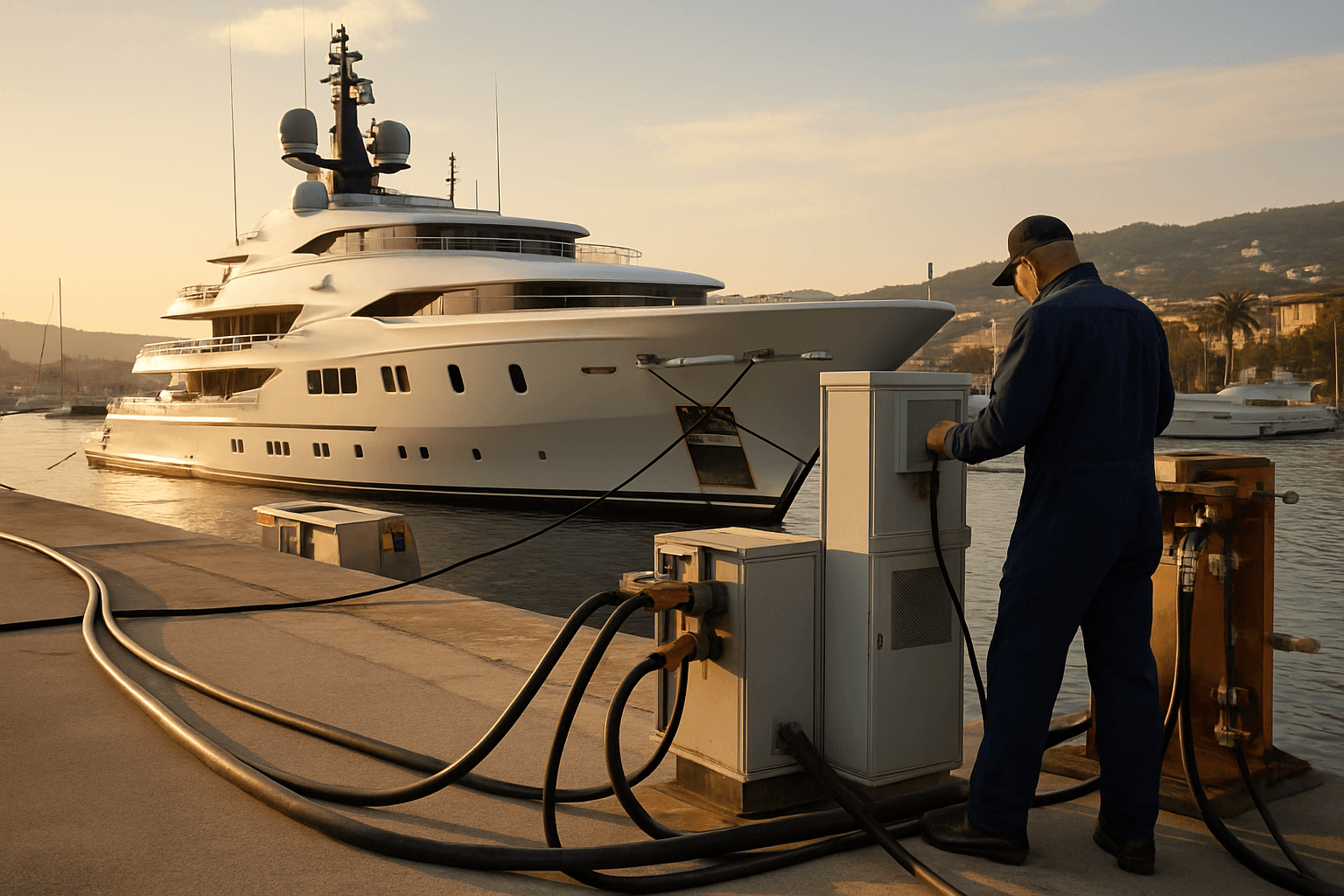
Lateral states that predicted Mediterranean infrastructure would enable charging from 20 to 100 per cent in 10 to 48 hours. If that percentage applies to the full 60 MWh, it means about 48 MWh. That is roughly 4.8 MW on average over 10 hours and 1 MW over 48 hours (calculation). For comparison, a 125 A, 400 V three-phase connection delivers about 87 kW (calculation). The charging figure depends on infrastructure that is predicted, not necessarily installed today.
Battery safety
Lateral lists class type-approved batteries with a battery management system, dedicated Ex-rated ventilation, automatic shutdown, watermist protection and A60 fire-rated compartmentation. The complete battery system will still undergo class approval, including HAZID and FMEA processes.
Regulatory context
FuelEU Maritime sets GHG intensity targets for energy used onboard, from 2% in 2025 to 80% in 2050. It applies to ships above 5,000 GT that carry cargo or passengers commercially. At about 1,700 GT, ENX falls below that threshold. RED III binds Member States rather than shipowners. Its maritime provision is an endeavour to reach at least a 1.2% RFNBO share of energy supplied to maritime transport from 2030, so the effect on yacht operators is indirect.
What operators should ask
Which ports and marinas will offer multi-megawatt charging, and by when? How much of the 60 MWh is the 37 to 50 MWh a typical charter needs, and how much is degradation and reserve? How much of the weight and capacity depends on batteries expected within five years? Does the 20 to 100 per cent figure apply to nominal or usable capacity? Class approval of the complete system is still ahead.