Blue Wake Awards 2026: Independent Validation of Marine Environmental Claims Through Lifecycle Assessment
The 2026 Blue Wake Awards mark a shift from unsubstantiated environmental claims to independently verified performance data. The Monaco Yacht Show's assessment process, managed by the Water Revolution Foundation, validated 60 projects across four technical criteria: emissions reduction, material circularity, eco-design and innovation, and marine ecosystem protection. Each application underwent independent technical review before jury selection, establishing a standard that separates credible environmental solutions from marketing narratives.
This distinction matters operationally. Yacht captains and technical managers now have a reference framework for evaluating supplier claims during procurement. Charter operators defending ESG commitments to guests can cite peer-reviewed lifecycle assessments rather than vendor self-reporting. Shipyards and refit facilities can benchmark their own environmental programmes against validated competitors.
Lifecycle Assessment as Operational Benchmark
Termodinamica's marine HVAC system exemplifies the analytical rigour now expected. The company conducted a cradle-to-grave lifecycle assessment comparing its inverter heat pump system with conventional chilled water systems across 10 impact categories, following ISO methodology. Independent peer review and verification by LCA experts confirmed reductions of 60 to 66% across assessed impacts. Operational tracking on a Mediterranean yacht over 8 days projected annual fuel savings of 8,000 litres and 22 tonnes of CO2.
This level of transparency reveals what genuine compliance looks like. The assessment covers manufacturing, installation, operational use, and end-of-life disposal. It identifies specific impact categories where improvements occur, not just aggregate claims. For technical managers evaluating HVAC upgrades during refit, this data supports business cases and regulatory defence.
Bespoke Projects' GreenCast acrylic demonstrates material circularity verification. The company compared recycled monomer (R-MMA) with virgin material under identical production conditions, using Environmental Product Declarations to quantify reductions in global warming potential, acidification, eutrophication, and fossil resource use. The company also tracks teak offcuts for reuse, closing material loops at component level.
Infrastructure and Operational Scale
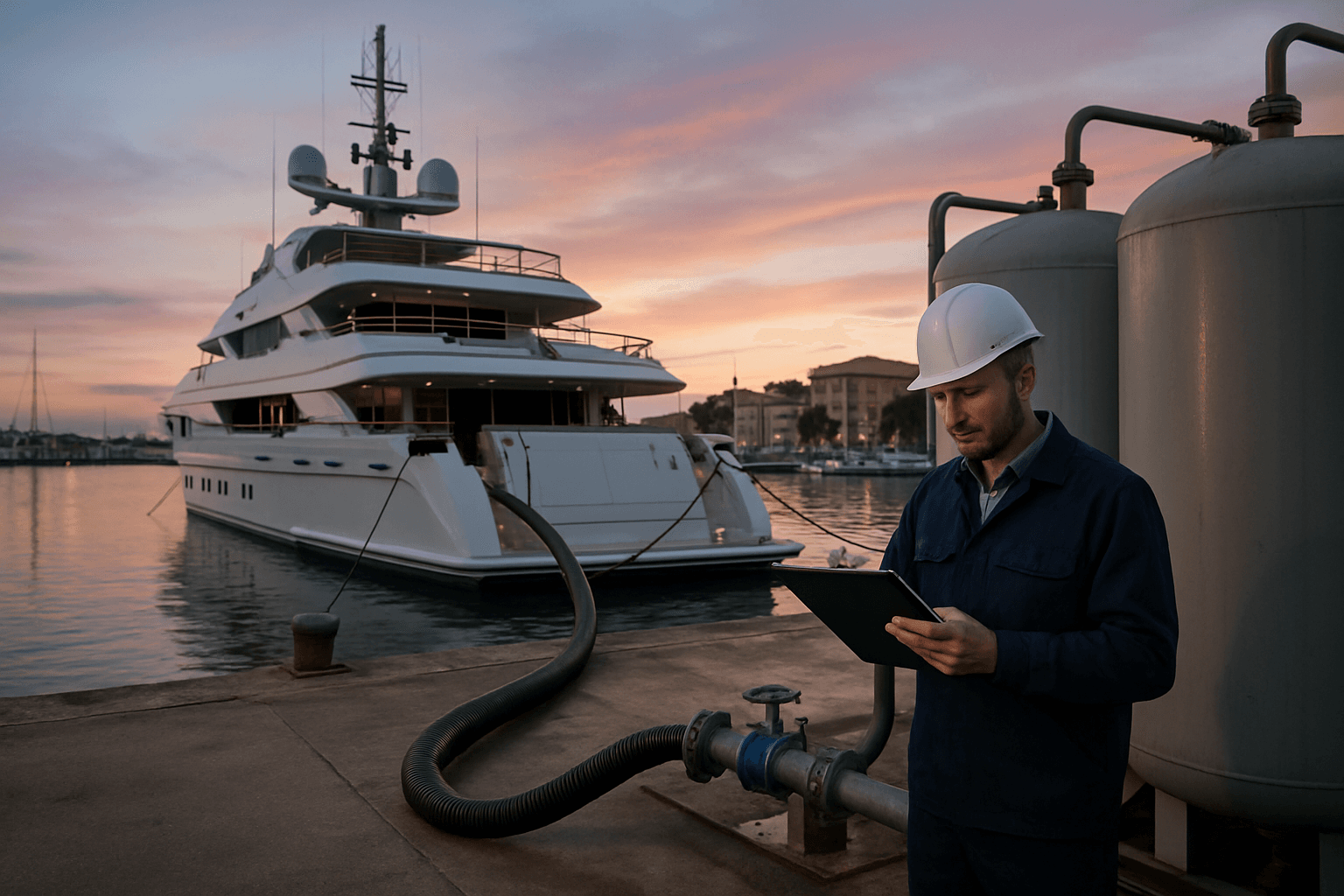
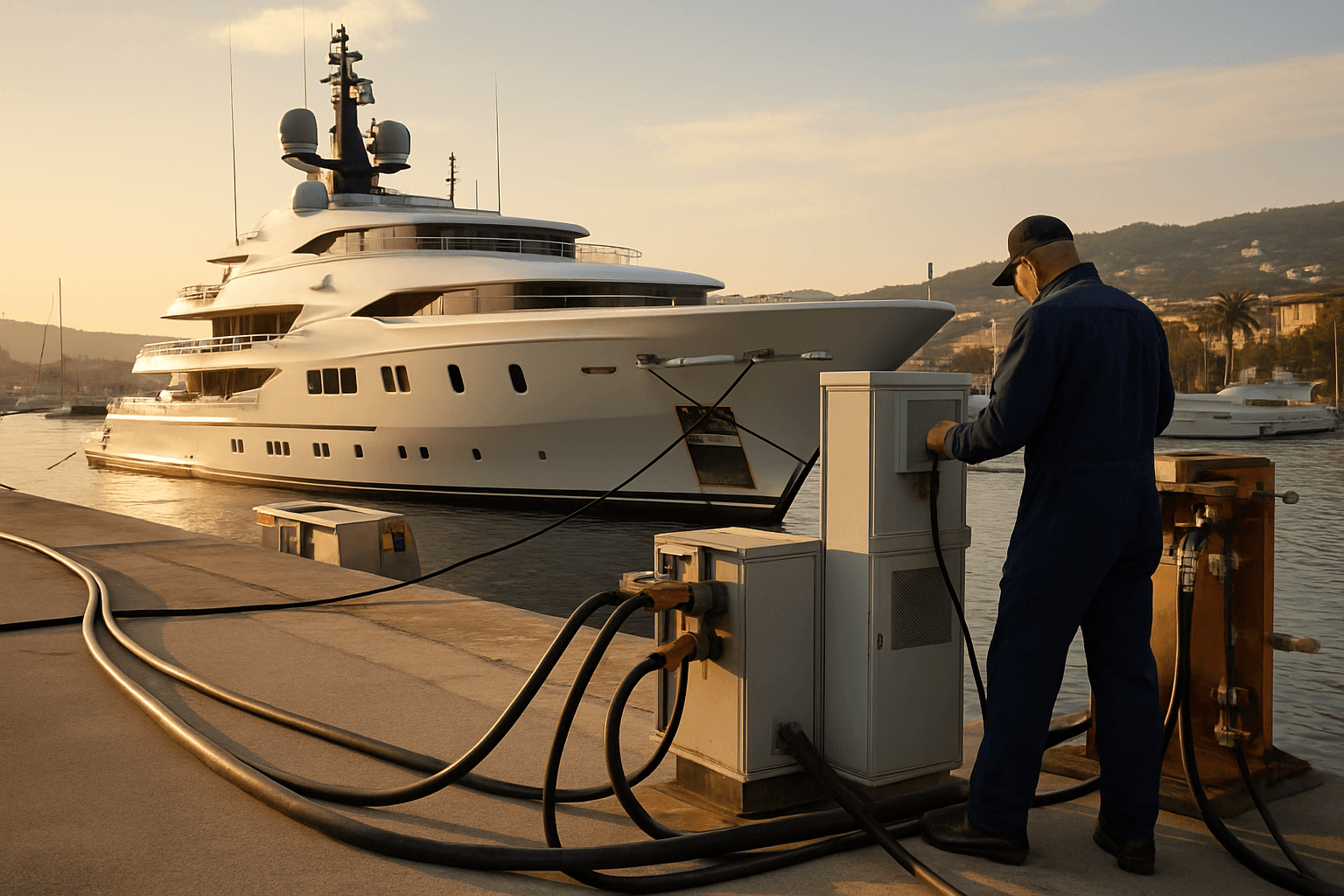
Amico & Co's Genoa facility demonstrates that environmental measures operate at full scale and remain economically viable. The 1 MW solar array avoided over 400 tonnes of CO2 last year. Every dock has shore power, eliminating generator operation for vessels alongside. Wastewater treatment occurs on site. Permanent sheds meet high energy efficiency standards. Waste separates into 25 streams at an Eco-Island, with over 1,000 tonnes recovered annually. ISO 14001 certification since 2002 provides third-party assurance of environmental management systems.
For port authorities and marina operators, this model shows that infrastructure investment in shore power and waste management delivers measurable emissions reductions for vessels alongside. FuelEU Maritime's onshore power mandate applies specifically to container and passenger ships above 5,000 GT, phased in from 2030 at TEN-T ports and 2035 across all EEA ports — most superyachts fall outside that specific obligation, so shore power here is best framed as operational best practice and future-proofing, not a direct compliance requirement. The yard's approach is replicable across Mediterranean and Northern European facilities.
Marine Ecosystem Restoration as Measurable Outcome
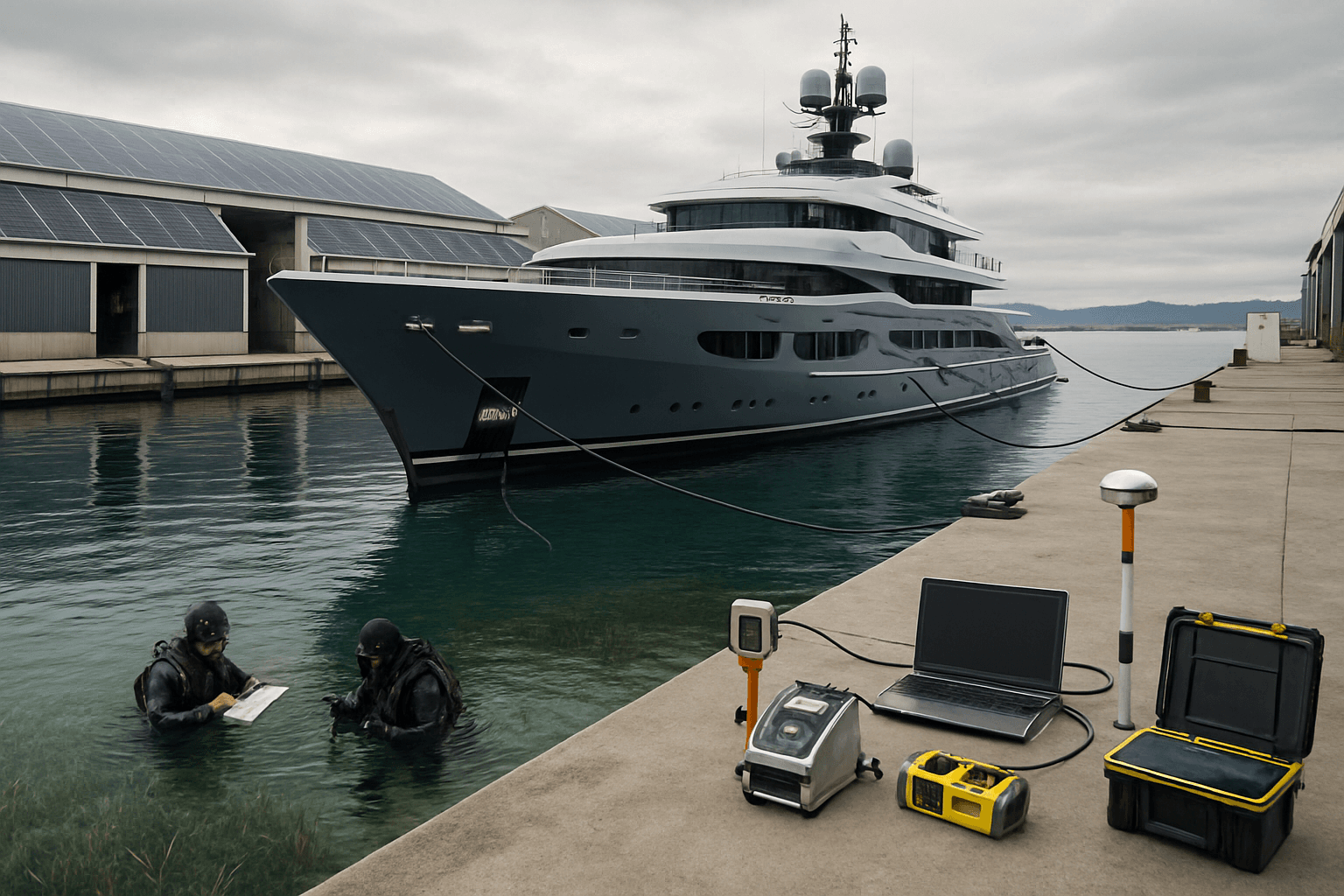
Marina Ibiza's Posidonia restoration project, conducted with the Vellmari Association since 2021, has replanted 86,000 seagrass plants across nearly 3,000 square metres. Survival rates exceed 90%. Divers monitor results using consistent transect methodology, recording 28 species in restored areas. This approach transforms ecosystem protection from a marketing statement into auditable environmental impact.
For charter operators operating in the Balearic Islands, this data supports claims that marina-led restoration partnerships actively restore marine habitats. Guests can verify that environmental commitments translate to measurable seabed recovery.
Propulsion and Operational Carbon Assessment
Simena, a 62-metre hybrid ketch from Ares Yachts, achieved an 11% improvement in operational carbon compared with the average fleet, assessed using YETI methodology aligned with ISO/TS 23099. Her hybrid propulsion includes electric motors and regeneration under sail, combined with low hourly fuel consumption and optimised hotel load power demand. This assessment reflects actual operational profiles rather than theoretical performance.
Tykun's tender designs underwent full lifecycle assessment from raw materials to end of life, following ISO 14040 and 14044 standards. Results cover 14 impact categories down to component level, identifying where largest impacts originate and where improvements are feasible. An Environmental Product Declaration is under RINA review, providing third-party validation.
What Readers Should Monitor
The Blue Wake framework establishes a credibility standard that will influence procurement decisions across the superyacht sector. Suppliers without independent verification will face increasing scrutiny. Shipyards and refit facilities should expect clients to request lifecycle assessments and Environmental Product Declarations as standard due diligence. Charter operators should integrate Blue Wake validation into ESG audit processes. Technical managers evaluating fuel systems, HVAC, materials, and propulsion should demand peer-reviewed lifecycle data before contract commitment.